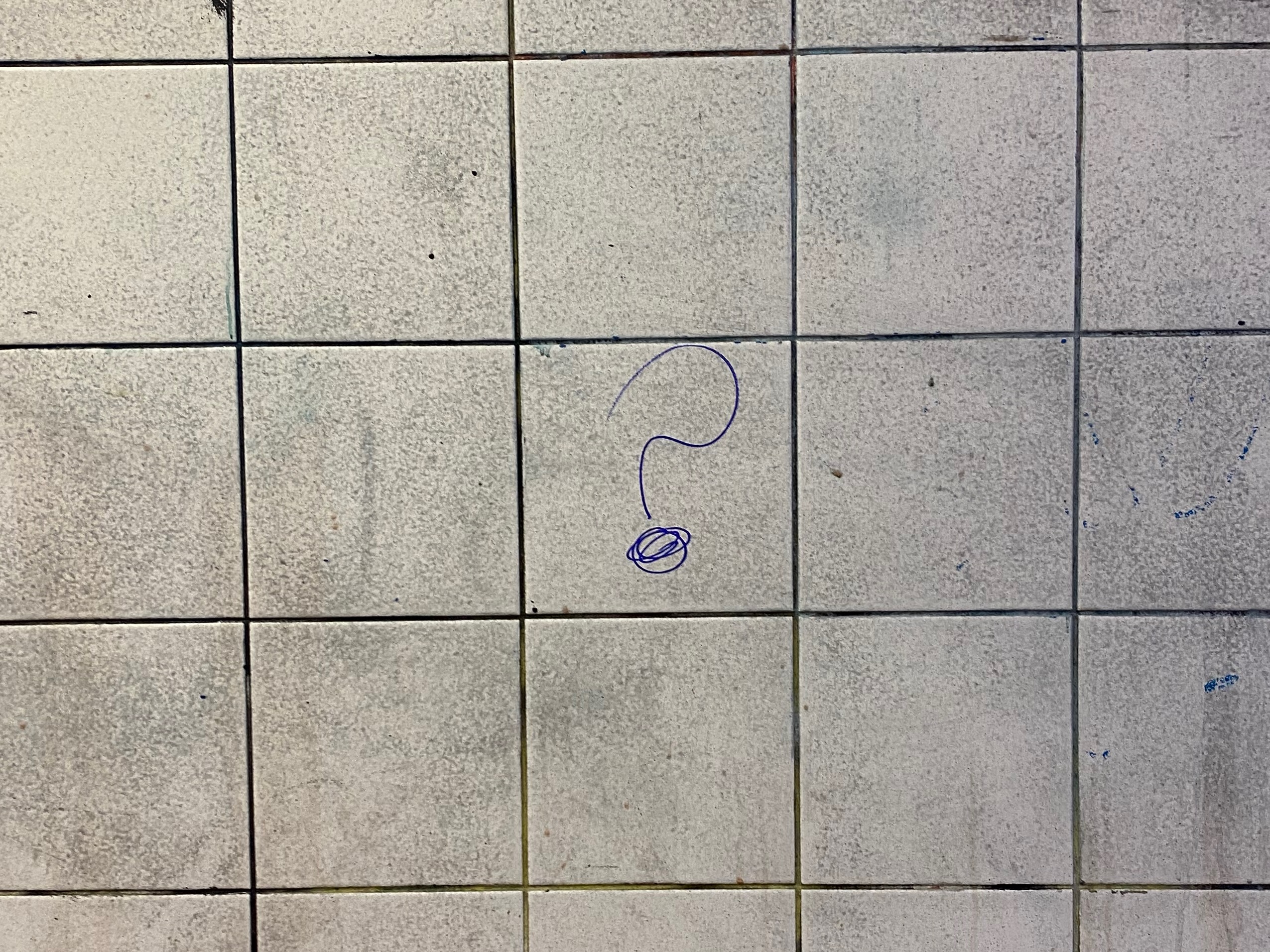
Observing the ongoing battle between the graffiti writers and “buffers”. Who are buffers, you might ask? Buff — To remove painted graffiti with chemicals and other instruments, or to paint over it with a flat color. You’d think buffers would be superior considering they’re usually assigned by the city council and operate legally. Is it really the case? As it seems, most of the buffs seem as ugly, if not uglier, than the tags and various throw-ups they aim to eliminate.
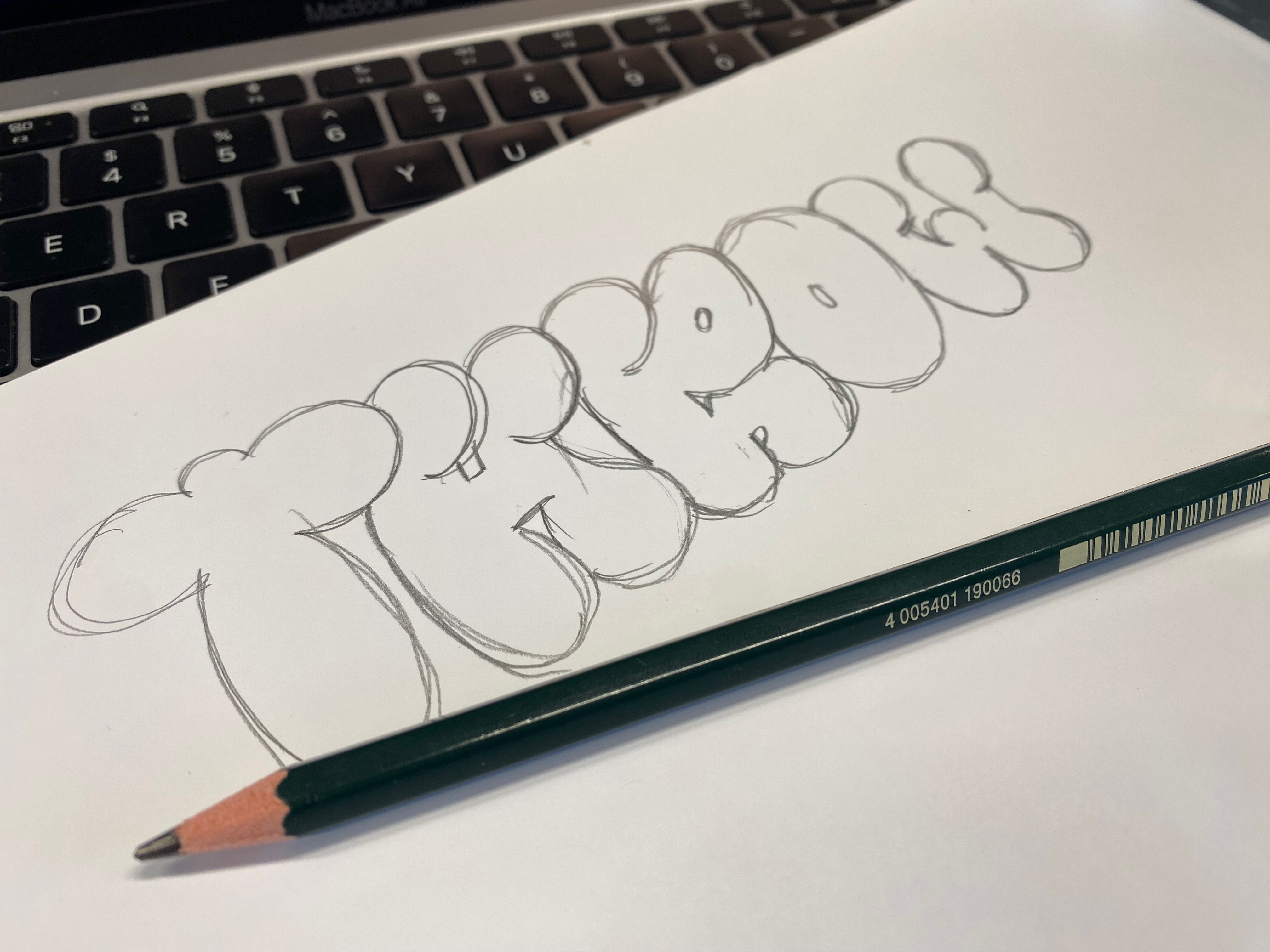
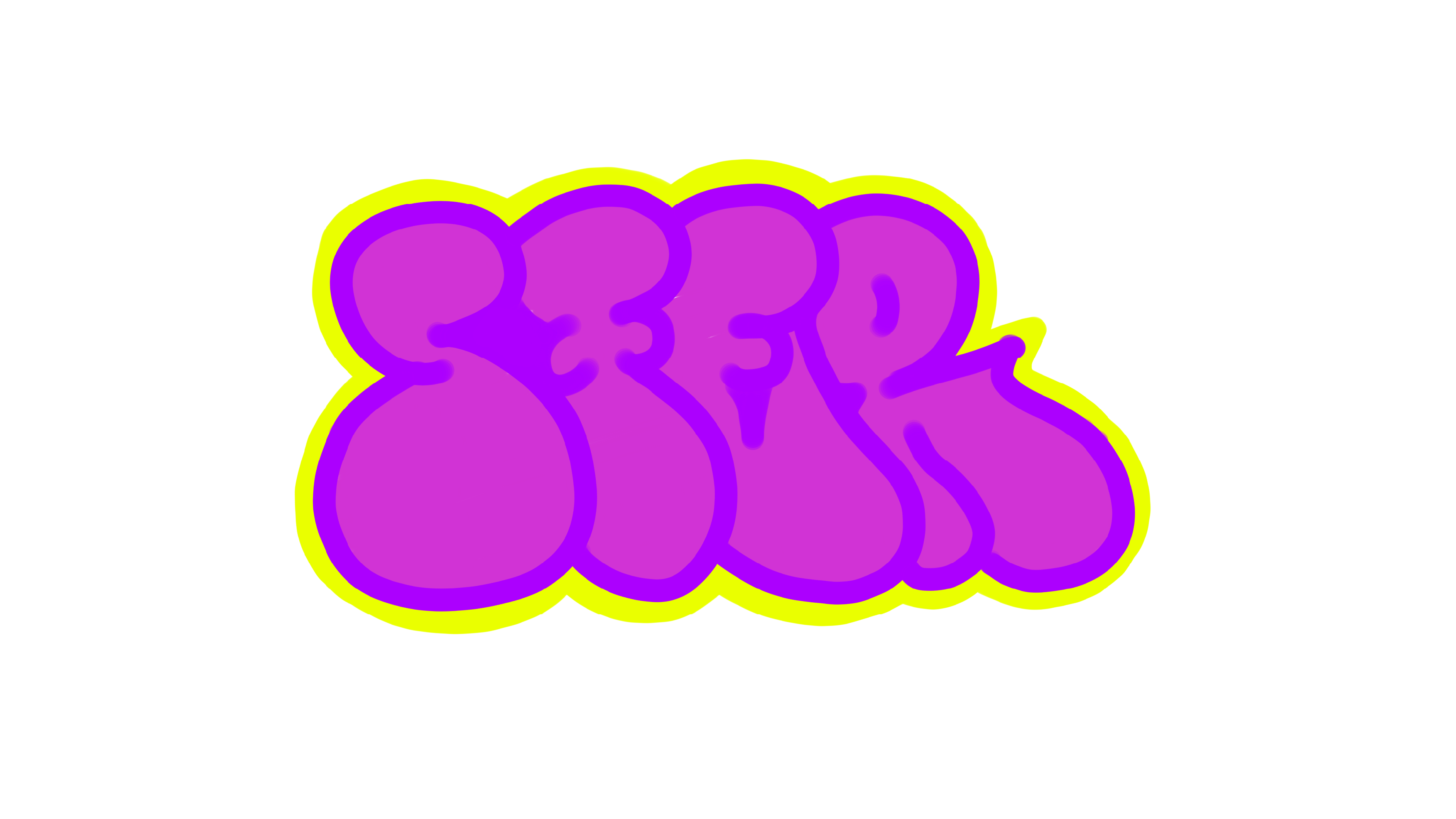
Firstly, we need to understand how a throw-up is born. Throw up — a form of graffiti that falls between tags and pieces in complexity. The name comes from how they are designed to be "thrown" onto a surface as quickly as possible. Typically, one would start by sketching their letter and word design on paper. This is the most time-consuming part, considering that the aim is for the throw-up to look good whilst also being as simple as possible, so it could be sprayed onto a surface as fast as possible. Finding the balance between both is challenging.
After the sketch is made, it’s time to create a couple of more designs on paper using different colors and details. By doing this, you will get a clear picture of which colors work together and which details are unnecessary. The process also helps to memorise the drawing process so it could be done without a reference.
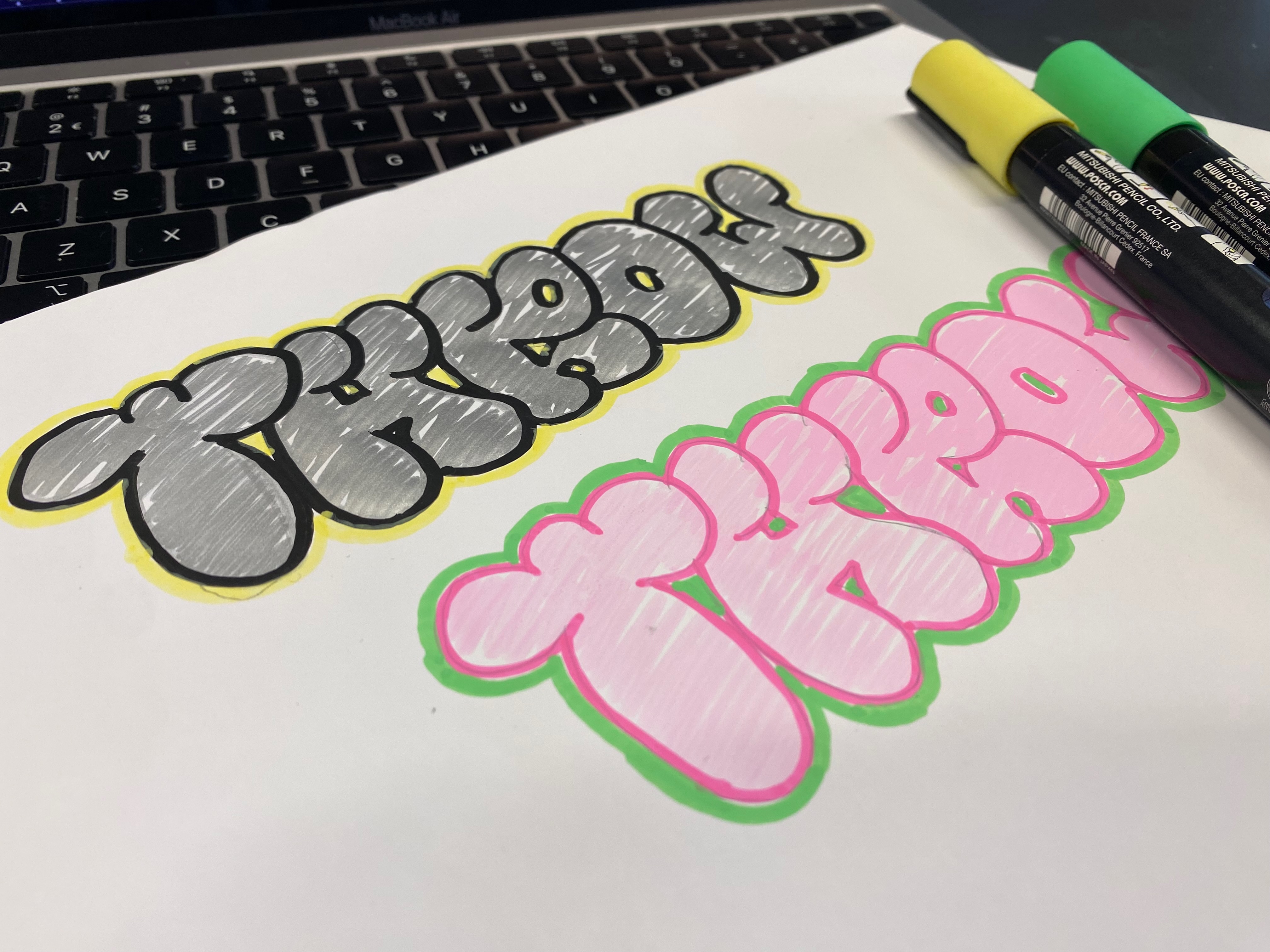
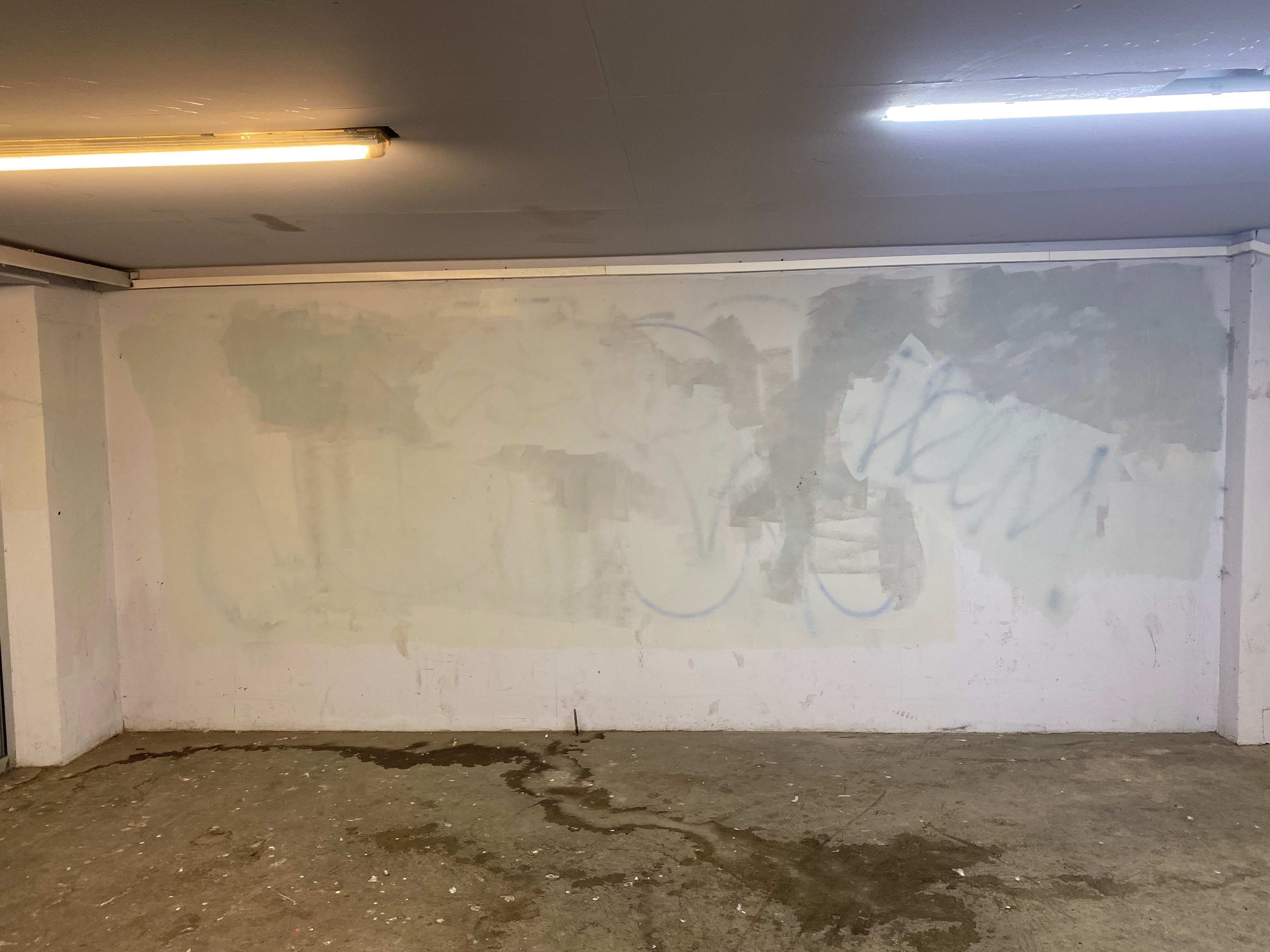
Having done all the prep work, all that is left is to find a suitable spot for the design to be projected onto. Typically, parts of the city that are densely populated are the prime candidates.
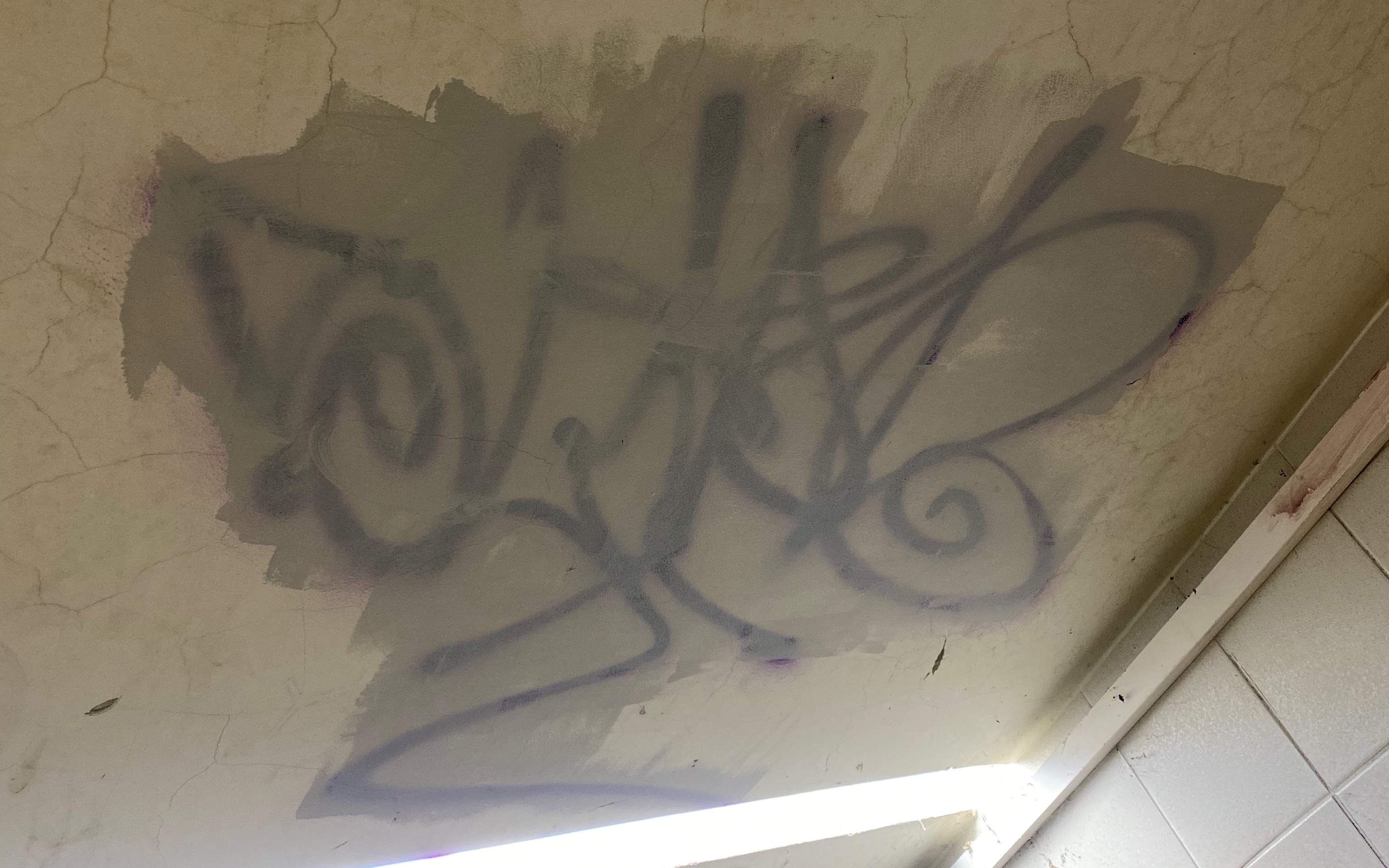
After having one's design on the wall for some time, you might find out that it has been covered. Buffing graffiti mainly depends on the location and the owner of the property. Usually, property owned by the city is buffed regularly. To keep costs low and save on time, the buffers use paint that is somewhat similar to the background wall, not paying attention to whether it matches perfectly. Painting a whole wall because of a small tag in the middle of it isn't practical. Graffiti is like Hydra, you cover up one and two appear the next time. That's why we're left with a painted box that stands out as much as the sole thing it's meant to cover, painting the whole wall each time would be wasteful and too time-consuming.
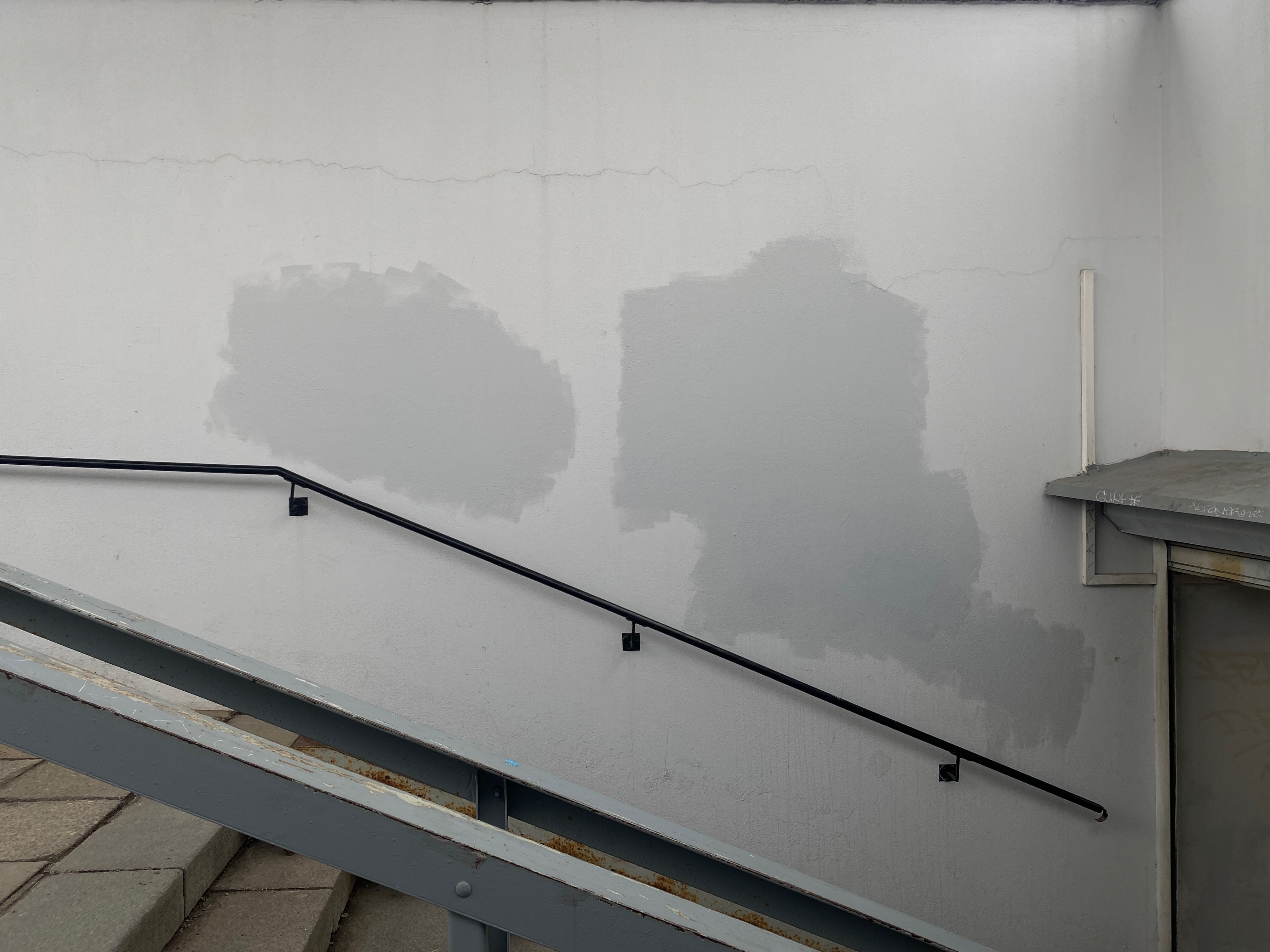
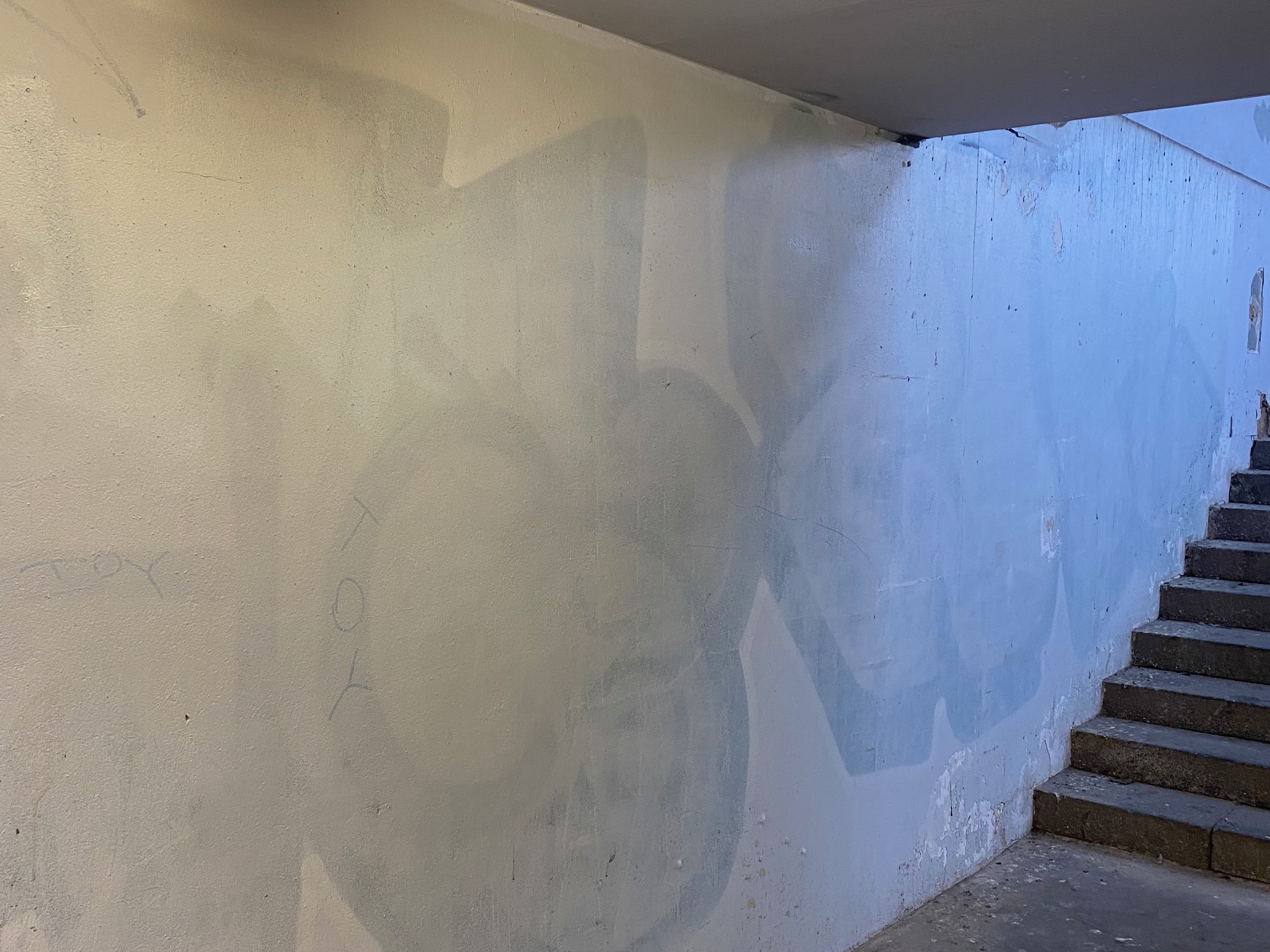
Graffiti artists and buffers share a weird symbiotic relationship – without one, there wouldn't be the other. Although buffers seem like the “good guys” by removing the tags and throw-ups, they leave behind a similar mark for themselves. It raises an interesting question: which one looks better? One could easily argue that a well-made street-art-worthy graffiti piece is better than a gray box on the wall. The same could be said that a well-painted wall that covers a not so well thought through ugly throw-up is better.
Passing by prime graffiti locations, an interesting sight can be seen – with each passing, either a new throw-up or a new gray box has appeared. Visiting the same spot a week later, you won’t see the throw-up anymore, but a box covering it, with other new throw-ups having emerged right beside it. This creates a static yet very alive world right under our noses. We rarely see the creators of these tags and boxes, but we see their creations. For them, it’s like a battlefield, taking turns destroying each other's work, yet the battle doesn’t shift in anyone's favour. The invisible yet very visible fight leaves no victors nor losers. It just keeps on going. So, which one looks more appealing? That’s a question left to the public, observing the chaos of the battlefield from the outside in.